
The Moment You Notice Something's Off
You're in the kitchen, garage remote in hand, watching through the window as the door rolls down. Your dog trots toward the opening to greet the mail carrier. You hit the button to stop it — and there's a half-second delay before anything happens. Or maybe it's your toddler's scooter left just inside the threshold, and the door comes down on it without ever slowing, without ever reversing. Nothing happened this time. But your stomach drops anyway, because you just saw, in real time, what your garage door would actually do if a small body or a paw were where that scooter was.
That moment — the near-miss — is usually the first time most homeowners think seriously about garage door safety. The good news is that the systems designed to prevent these accidents are well understood and easy to test. The bad news is that in a lot of homes, those systems have quietly stopped working and nobody knew until something or someone got close to finding out the hard way.
What Actually Goes Wrong
Garage doors are not just big doors — they're mechanical systems built around tensioned springs and motors capable of exerting several hundred pounds of force. When the safety features built into them fail or get bypassed, a few predictable things happen:
- The auto-reverse sensors stop working. Every modern opener has photo-eye sensors a few inches off the ground that detect when something is in the door's path and force it back up. Dust buildup, a bumped bracket, or a sensor knocked slightly out of alignment by a stray soccer ball can disable this feature without any obvious sign — the door still goes up and down fine on an empty threshold.
- The mechanical reversal (force setting) is too high. Even without photo eyes, doors are supposed to reverse if they meet resistance. If that force threshold is set too aggressively — often done to compensate for an old, stiff track or worn rollers — the door may keep closing against something instead of stopping.
- Pinch points on older panel doors. Doors manufactured before pinch-resistant designs became standard have sections that can close on small fingers between panels, not just at the bottom edge.
- Remotes and keypads become toys. Kids find garage remotes fascinating. A remote left on a low table or in a diaper bag within reach becomes a way for a child to activate the door with no adult watching what — or who — is underneath it.
- Springs let go without warning. A worn torsion spring doesn't always give a gradual warning. It can snap suddenly, and a door in mid-motion when that happens can drop fast. This is rare, but it's exactly the kind of failure that's catastrophic when it does happen.
None of these are theoretical. Entrapment injuries from garage doors — crushed fingers, broken bones, and worse — are among the most common home-safety incidents involving kids and pets, and they almost always trace back to one of the issues above, not a one-in-a-million fluke.
The Checks That Actually Prevent It
Most of this is a 10-minute project, not a renovation.
- Run the auto-reverse test monthly. Place a roll of paper towels or a 2x4 flat on the ground in the door's path, then close the door from the wall button. It should reverse immediately on contact. If it doesn't, stop using the opener until it's serviced — this is not a wait-and-see item.
- Check the photo-eye alignment. The two small sensor eyes near the bottom of the tracks should have steady, solid lights (not blinking) and point directly at each other. Wipe off dust — this matters more here than in a lot of climates, since dust and dry wind are a near-constant in this part of Texas and settle on sensor lenses faster than most homeowners expect.
- Keep remotes and keypad codes out of easy reach. Store wall-mounted remotes above a child's reach, set a keypad code that isn't the house address or birthday, and treat garage remotes the same way you'd treat car keys.
- Teach kids the line rule. A simple household rule — nobody stands or plays under a moving door, period — does more than any sensor. Pets can't learn this, which is exactly why the sensors and reversal force matter so much for them.
- Watch for slow, jerky, or uneven motion. A door that hesitates, sags to one side, or makes a grinding noise on the way down is often a spring or cable under uneven tension — and that's a mechanical failure risk, not just a noise issue.
- Don't DIY spring work. Torsion springs store enough energy to cause serious injury during replacement. This is one repair worth leaving to someone with the right bars and clamps.
A Seasonal Note
Fall in San Antonio still brings sudden wind and the occasional hard storm even as temperatures ease off. Wind-blown grit and debris can knock sensor brackets out of true alignment without any visible damage, and kids and dogs tend to be outside more in the cooler afternoons — right in the driveway, right near the door. It's a good stretch of the year to run through this checklist once, rather than assuming summer heat was the only thing that could affect the system.
When to Call San Antonio Garage Door Pro
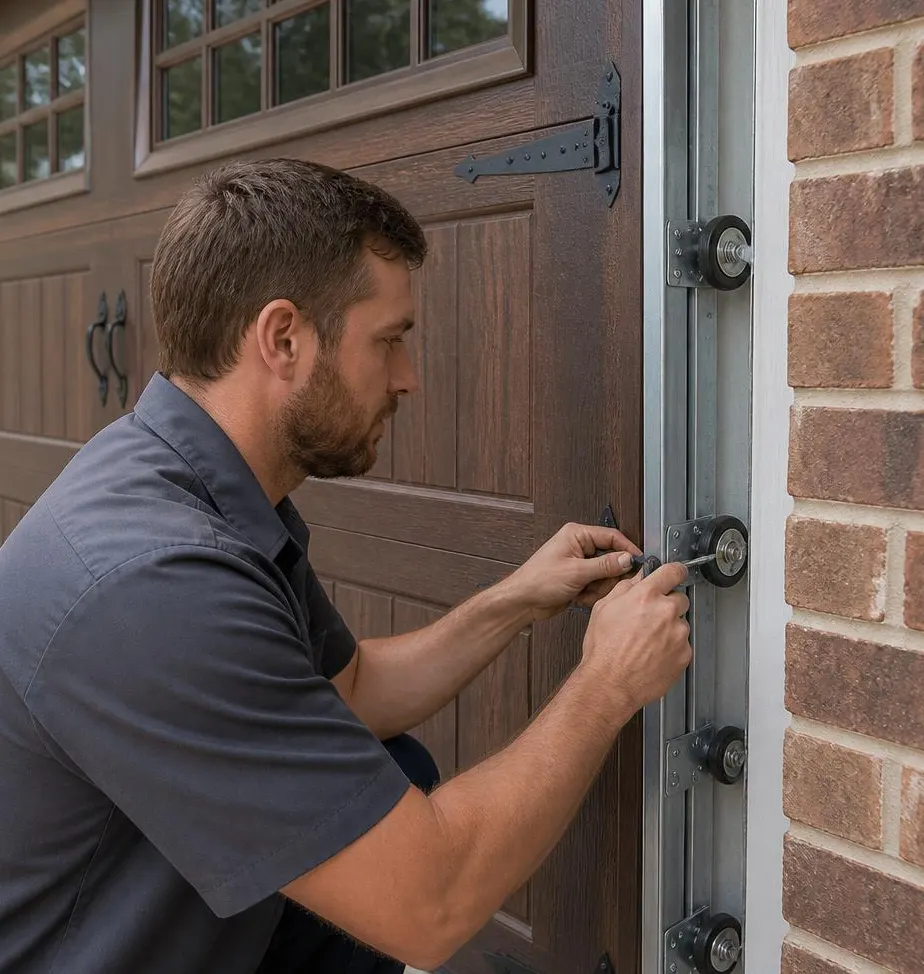
If your auto-reverse test fails, your sensors won't stay aligned, or your door is making noise and moving unevenly, don't wait for a bigger scare. San Antonio Garage Door Pro can run a full garage door opener repair and installation check to restore proper auto-reverse function and sensor calibration, and handle spring replacement safely if worn or mismatched springs are behind the uneven motion. We serve households throughout San Antonio, Converse, Live Oak, Schertz, Universal City, Selma, New Braunfels, and Cibolo, and we show up ready to fix the actual problem, not just silence the symptom.
If something about your garage door has made you pause lately, trust that instinct. Call San Antonio Garage Door Pro today and get it checked before it becomes an emergency.